How to Make Error Dashboards Readable Instead of Merely Detailed
Readable dashboards do more than show data. They impose a useful order on it so the person looking at the page can make a decision quickly.
On this page
A dashboard is readable when it reduces the number of mental joins the user has to make. That is a product design problem before it is a data problem.
If the person has to infer severity, deduce the runtime, and hunt for user impact, the dashboard is only technically informative. It is not operationally useful.
The default mistake is to optimize for density: more filters, more charts, more fields on the first screen. Small teams pay the price in slower triage.
What this product surface should optimize for
Why default dashboards become noisy so quickly
The default dashboard pattern usually starts with raw events, big charts, and a lot of optional filters. That can look powerful while still failing the core product job.
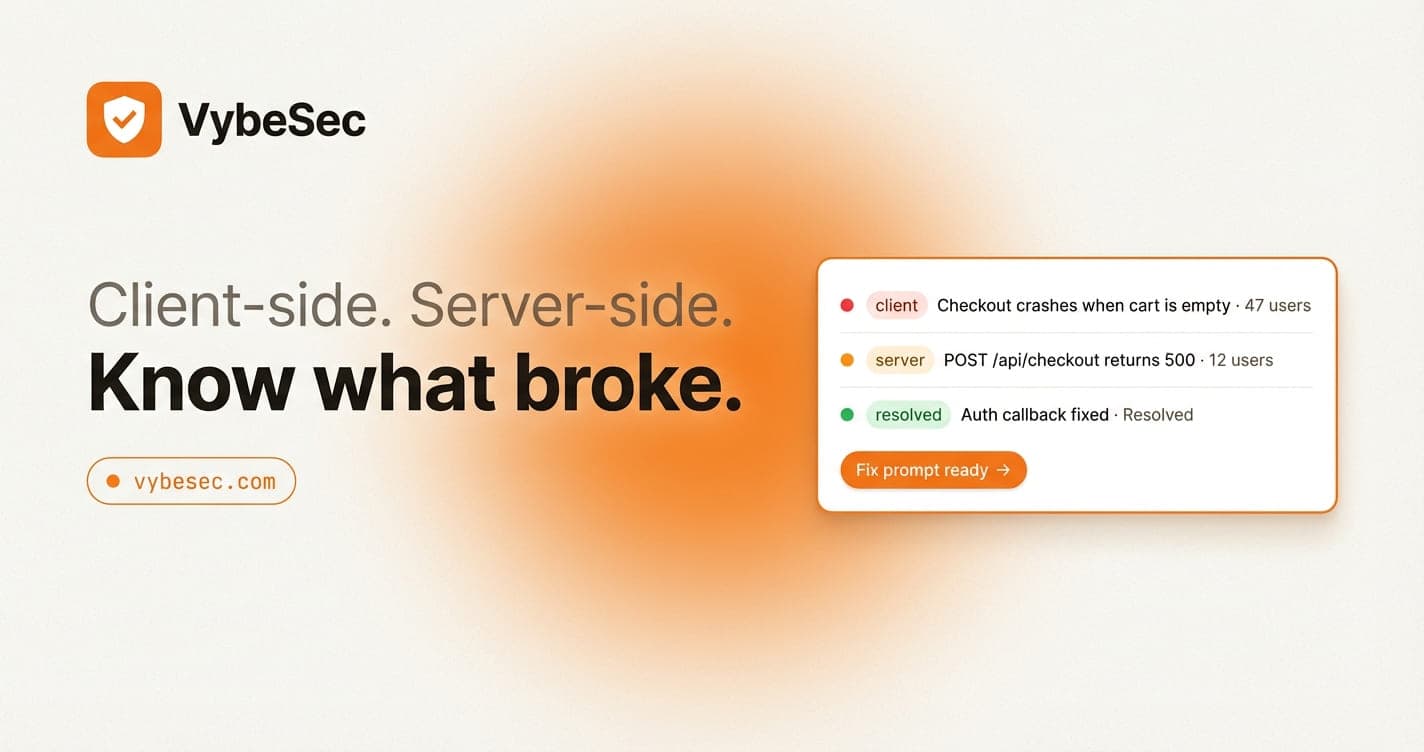
The core job is to help the reader answer three questions quickly: what broke, how bad is it, and what should happen next. If the design does not support that sequence, the page is detailed but not useful.
What this workflow should do first
A dashboard is readable when it reduces the number of mental joins the user has to make. That is a product design problem before it is a data problem. Product design in monitoring is mostly about ordering: what the team sees first, what evidence comes second, and where the repair path begins.
When that order is wrong, even good data feels noisy. When it is right, the product feels calm under pressure.
What teams feel on a weak dashboard versus a strong one
The failure mode to watch in the first month
Early dashboards often look fine until the second or third real incident. That is when the team starts to notice whether the issue feed is helping them think or merely showing that errors exist.
A strong product surface should get better as incidents repeat because grouping, summaries, and next actions become more valuable over time. A weak one only gets louder.
How a good monitoring flow unfolds
Dashboard
Decide whether the issue matters now.
Decide whether the issue matters now.
Issue page
Understand the evidence and likely cause.
Understand the evidence and likely cause.
Repair
Move into the fix workflow with context already attached.
Move into the fix workflow with context already attached.
Design it around the response loop
A readable dashboard stages information: summary first, evidence second, remediation third. That order mirrors the real response loop.
That is the difference between a monitoring product and a pile of telemetry. The product understands the response loop and structures the data around it.
Product design checklist
- ✓Lead with human language.
- ✓Use visual hierarchy to emphasize severity and impact.
- ✓Keep the runtime visible but secondary to the summary.
- ✓Delay detail until the issue page.
- ✓Treat the dashboard as a decision surface, not a data dump.
Common questions
Where VybeSec fits
VybeSec is designed as a product surface first: readable issues, connected client and server context, optional replay where it helps, and remediation paths that fit the way AI-assisted teams already work.
That is why the product feels different from telemetry-heavy tools. It is optimized for incident understanding, not only for event collection.
Stay close
Want practical setup playbooks like this?
We publish implementation guides for client and server monitoring, alerting, and fix workflows you can ship quickly.
Related posts