// blog
Product, engineering, and the real work behind AI-built apps
Founder-focused essays, technical breakdowns, and product notes on monitoring apps built fast and shipped to real users.
Featured
Start here if you want the clearest product context first.
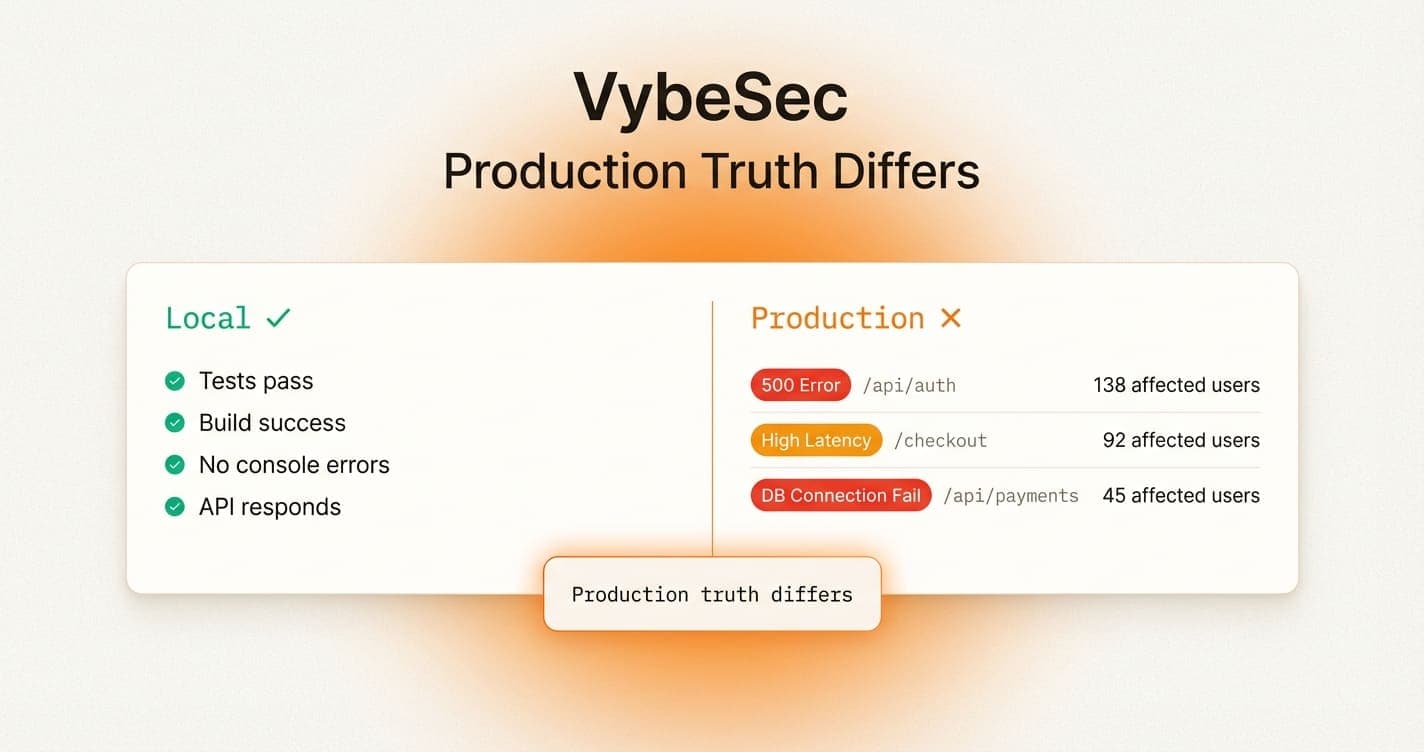
Why AI-Built Apps Crash in Production Even When They Look Fine Locally
Local success is a weak signal. Real users trigger different routes, payloads, permissions, and edge conditions. This is how to design monitoring for that reality.
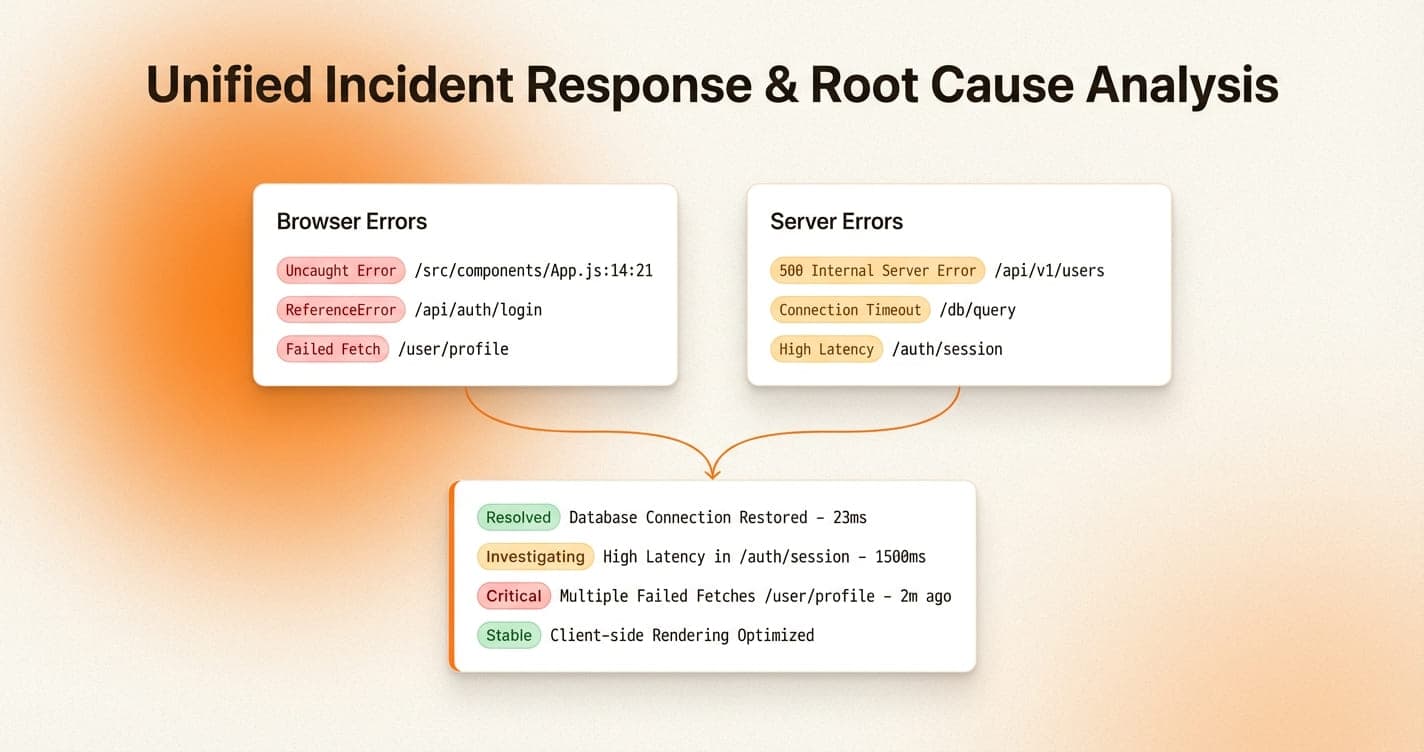
Why Client-Side and Server-Side Monitoring Should Share the Same Feed
When browser failures and backend failures land in different tools, the team spends more time reconciling incidents than fixing them. One feed changes that.
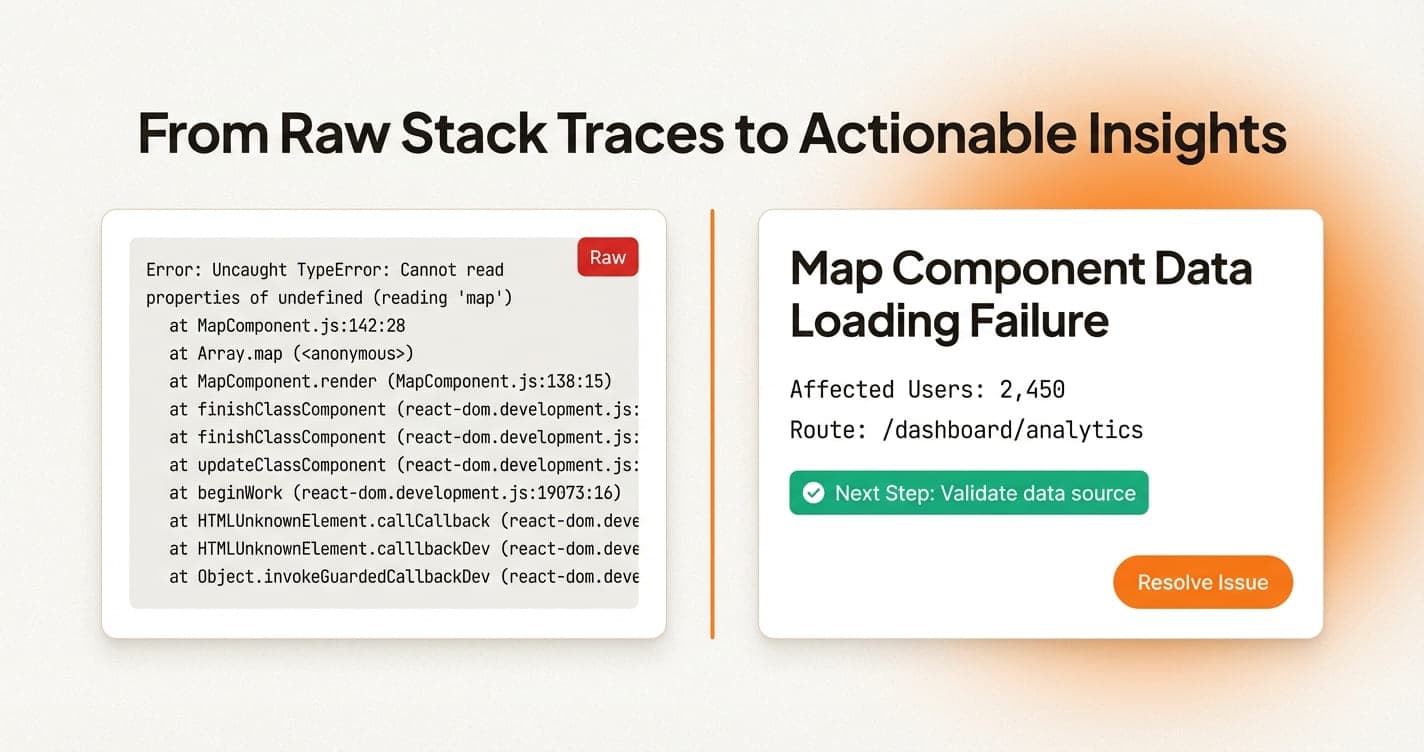
Plain-English Error Feeds Beat Raw Stack Traces for Small Teams
Small teams do not need more noise. They need an issue feed that converts technical failures into decisions they can act on quickly.
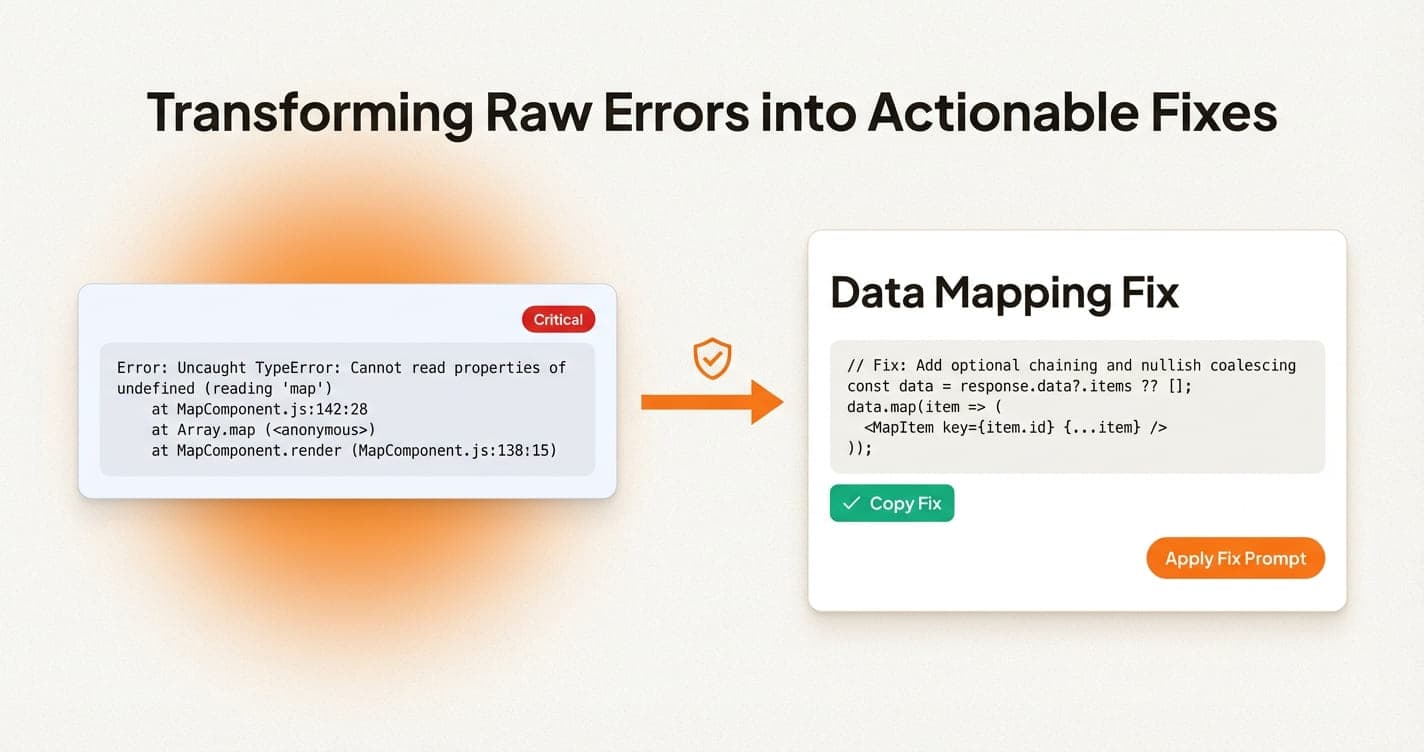
Fix Prompts Are the Missing Layer Between Monitoring and Repair
AI-built apps move faster when the monitoring product does not stop at detection. The next step should already be shaped into a usable fix prompt.
All posts
Founder notes, product decisions, and technical implementation details.
Showing 13–18 of 32

Monitoring Framer, Webflow, and Exported Sites After They Go Live
The launch path is easy. The post-launch path is where exported sites still need visibility into browser issues, forms, and the backend pieces attached to them.

How to Design Alerts That Founders Will Actually Read
Alerts fail when they ask the reader to interpret too much. Good alerting compresses urgency, context, and next action into one message.

Why Security Reviews for AI-Built Apps Need Context, Not Just Scanners
Scanners find fragments. Founders need context: which route is risky, why it matters, and how to reason about priority without security-team overhead.

What a Good Issue Feed Looks Like for a Small Team
A good issue feed is not just grouped errors. It is the operating surface where small teams decide what to fix now, what to watch, and what can wait.
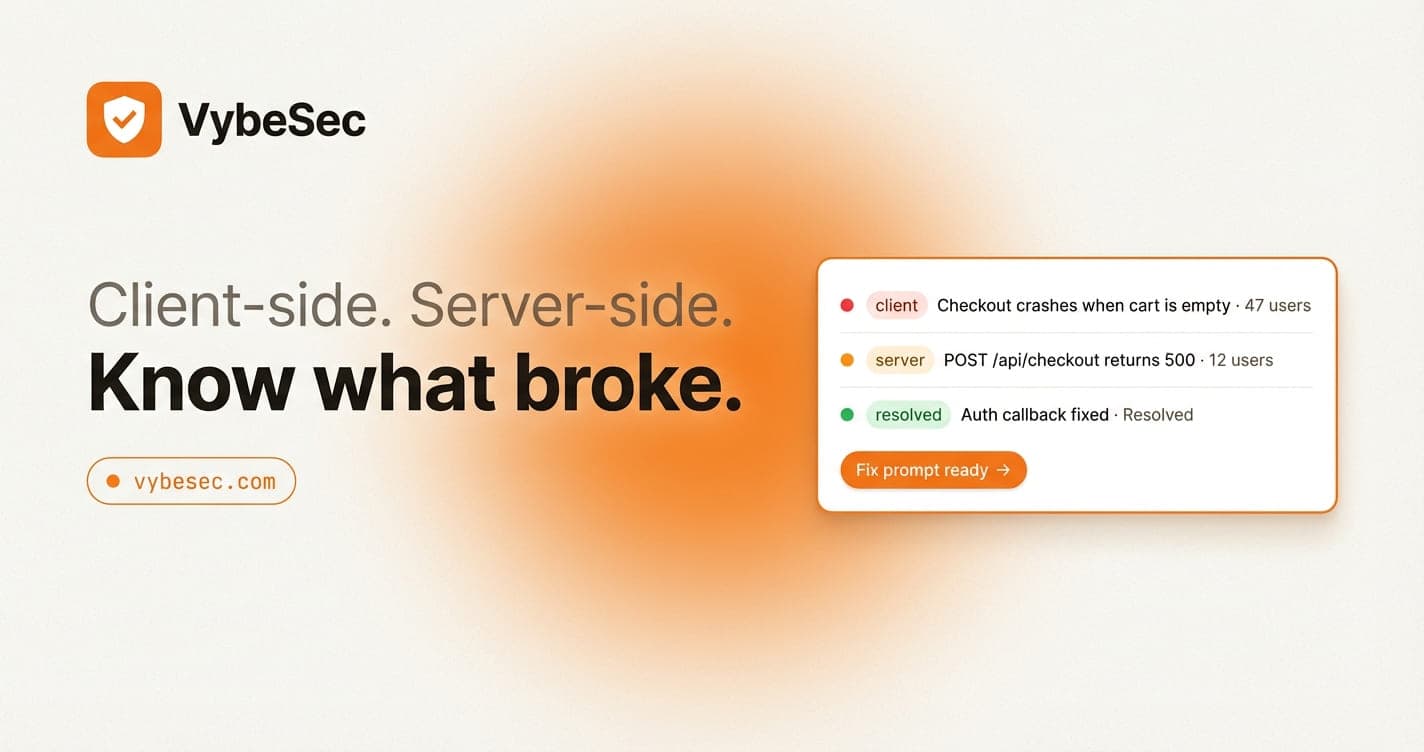
How to Roll Out Monitoring Without Slowing the Release
Good monitoring rollout is not a giant integration project. It is a narrow, staged path that gives you useful signal quickly without blocking launch.
React Native and Expo Monitoring for Teams That Ship Fast
Mobile teams moving fast still need readable issues, release-aware debugging, and a clean way to see what broke once the app is on real devices.