// blog
Product, engineering, and the real work behind AI-built apps
Founder-focused essays, technical breakdowns, and product notes on monitoring apps built fast and shipped to real users.
Featured
Start here if you want the clearest product context first.
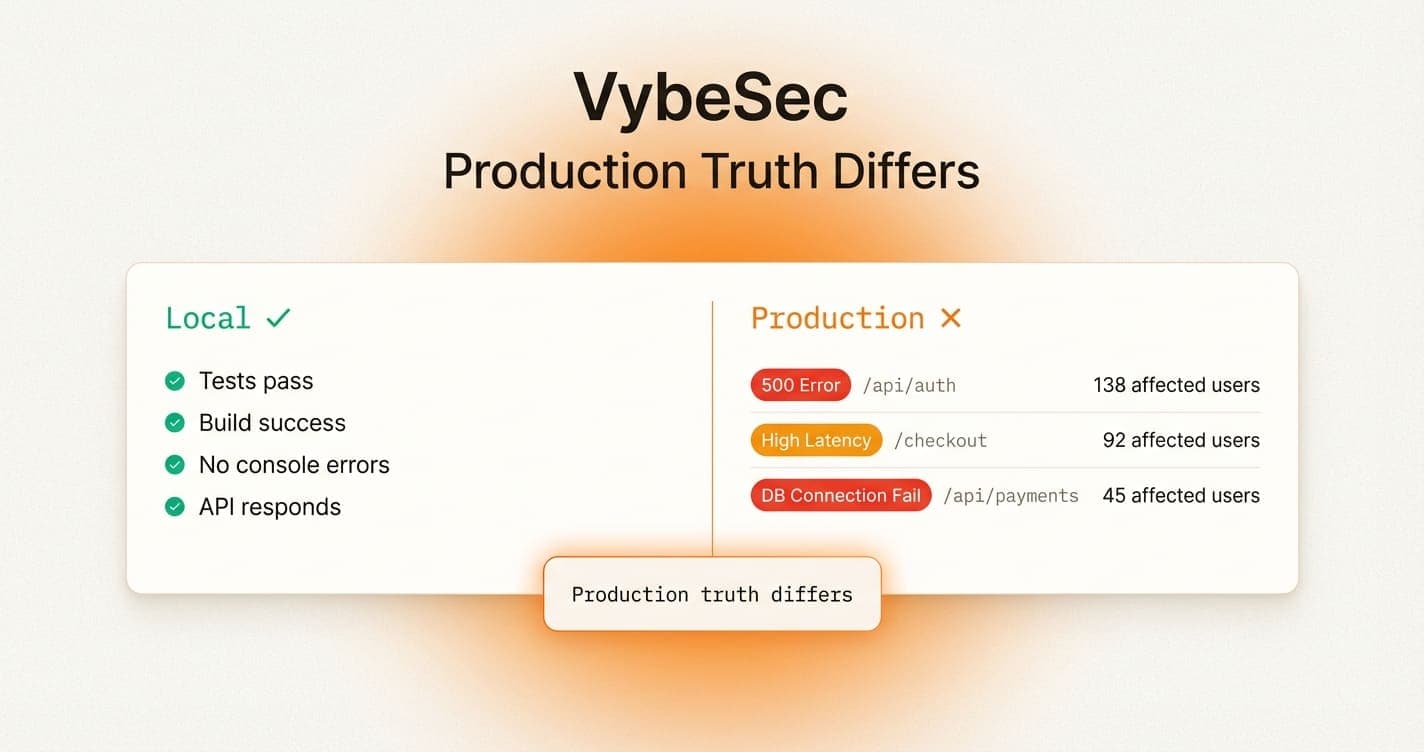
Why AI-Built Apps Crash in Production Even When They Look Fine Locally
Local success is a weak signal. Real users trigger different routes, payloads, permissions, and edge conditions. This is how to design monitoring for that reality.
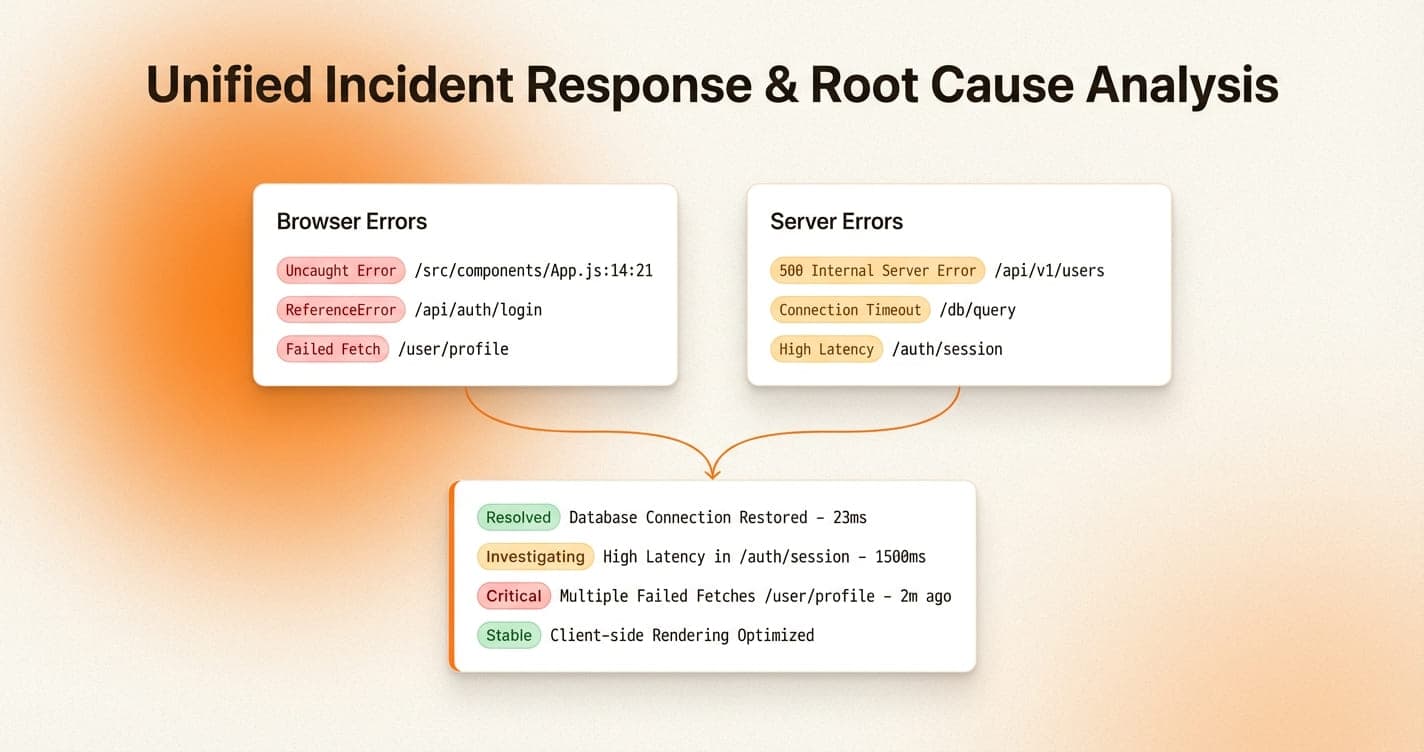
Why Client-Side and Server-Side Monitoring Should Share the Same Feed
When browser failures and backend failures land in different tools, the team spends more time reconciling incidents than fixing them. One feed changes that.
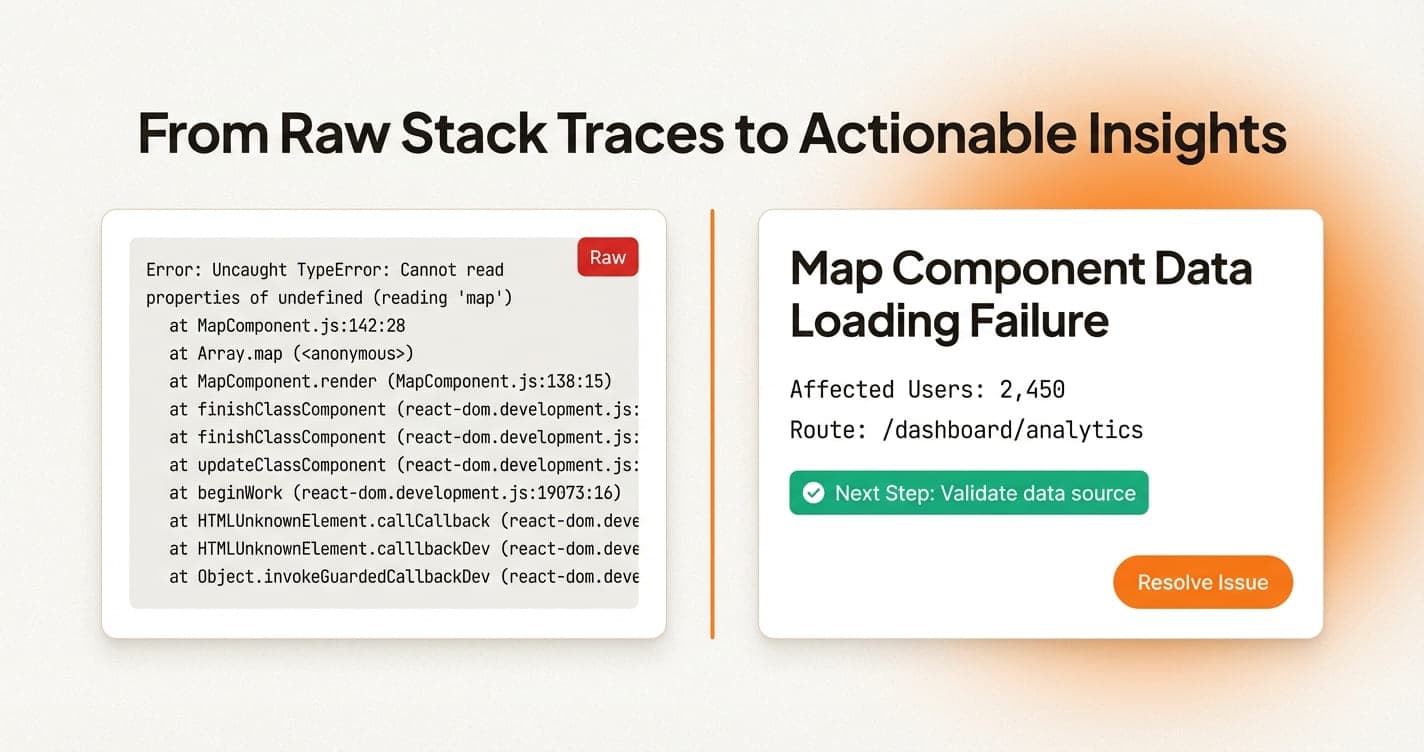
Plain-English Error Feeds Beat Raw Stack Traces for Small Teams
Small teams do not need more noise. They need an issue feed that converts technical failures into decisions they can act on quickly.
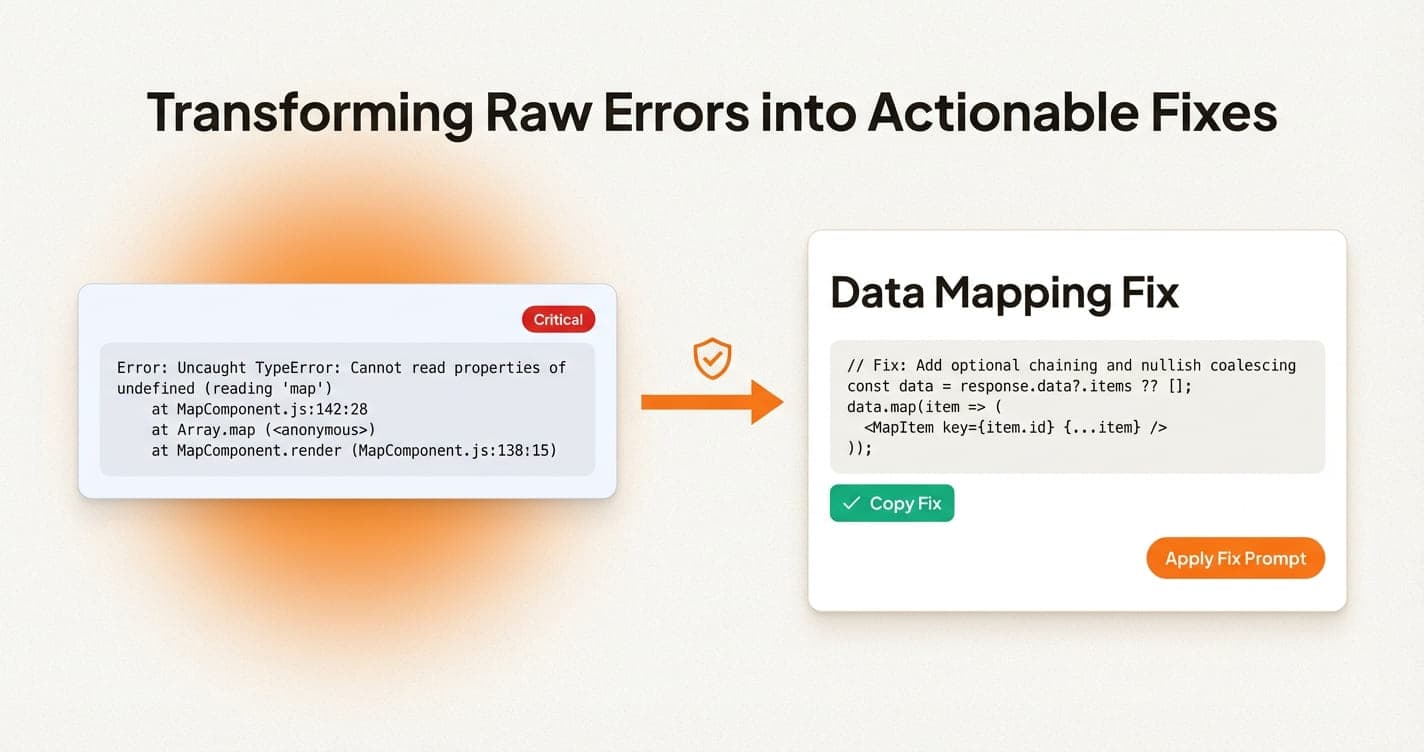
Fix Prompts Are the Missing Layer Between Monitoring and Repair
AI-built apps move faster when the monitoring product does not stop at detection. The next step should already be shaped into a usable fix prompt.
All posts
Founder notes, product decisions, and technical implementation details.
Showing 25–30 of 32
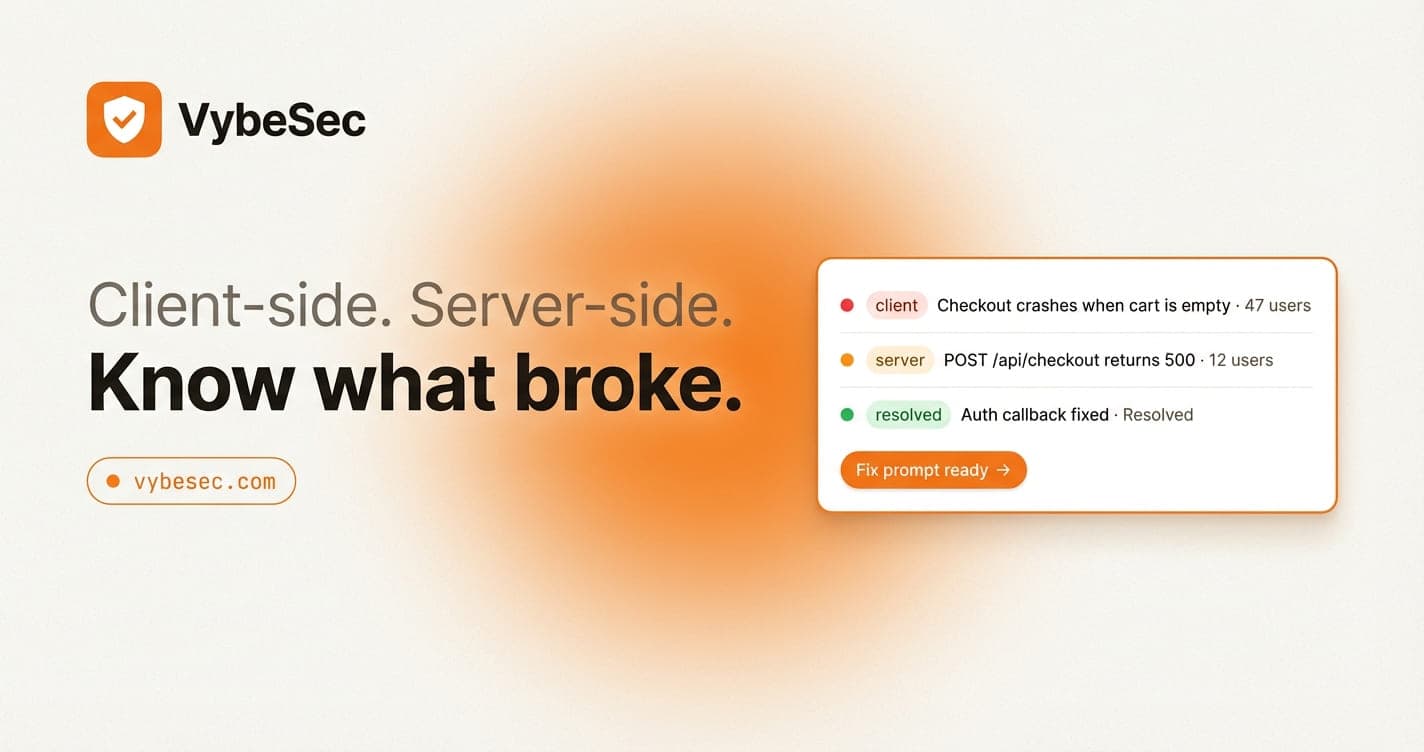
Why Supabase Edge Functions Feel Silent When They Fail
Edge functions often power the most important product paths while staying out of sight. Without deliberate capture, they fail quietly and leave the browser holding the blame.
Session Replay Without Creeping Users Out
Replay can be useful and respectful at the same time. The difference is whether it is designed as incident context with clear boundaries instead of voyeuristic product theater.
Alert Fatigue Starts With Bad Routing, Not High Volume Alone
Teams do not ignore alerts only because there are many of them. They ignore alerts because the routing and message design teach them the product is not worth checking.
A Practical Monitoring Guide for Next.js App Router Projects
App Router projects mix server and client boundaries in ways that look elegant in code and messy in production incidents. This is the monitoring setup that keeps them readable.
How to Onboard Monitoring in Five Minutes Without Creating Future Mess
Speed matters, but so does placement. A five-minute monitoring setup is only good if it still creates a durable incident workflow later.
Why Free-Forever Plans Break More Devtools Businesses Than People Admit
A monitoring product with real infrastructure cost has to align pricing with the work it performs. Trial-first models can be cleaner than pretending everything stays free forever.